

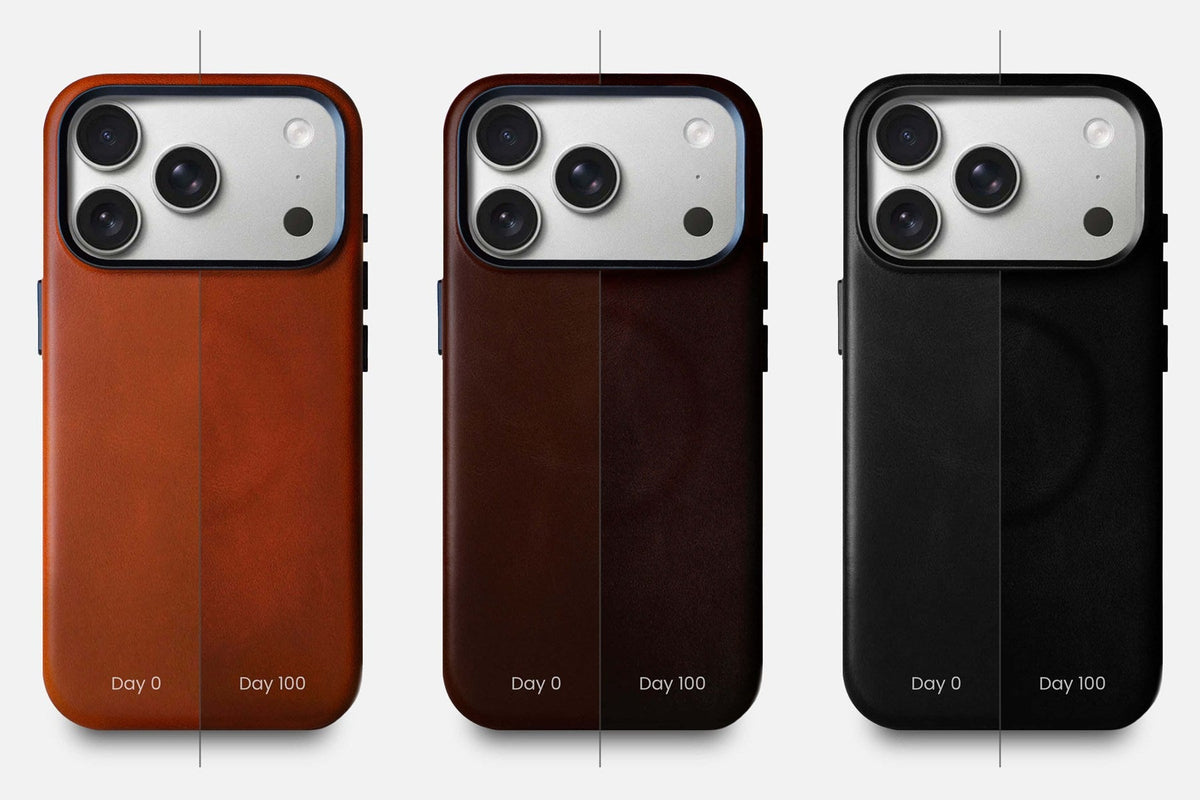
A leather phone case picks up marks. Keys, coins, rain and a greasy fingerprint after lunch all leave something behind. The good news is that most scratches and stains on a leather phone case can be fixed at home with a clean fingertip, a soft cloth and a little patience, and the rest tend to fade as the leather darkens.
This guide is written for full grain leather, which is what our cases are made from. It goes mark by mark: what causes it, how to fix it, and when the best fix is to leave it alone.
The short version
- Light scratch: rub it with a clean fingertip for half a minute.
- Deeper scratch: work a pea sized amount of leather conditioner into the whole back of the case.
- Water mark: dampen the whole panel evenly and let it dry slowly.
- Grease: blot it, cover it with cornflour overnight, brush it off.
- Ink: blot it straight away, then leave it. Do not reach for alcohol.
First, know what you are working with
Full grain leather keeps the outer surface of the hide exactly as it is: no sanding, no buffing, no coating on top. That is why it feels the way it does and why it ages into a patina. It is also why it marks. There is nothing plastic between your keys and the leather. If you want the longer explanation of leather grades, it is in our guide to what to look for in a leather case.
The upside is that the same surface can be worked back into shape. Vegetable tanned leather holds oils and waxes worked in during finishing, and most of the fixes below simply move them around. A coated leather resists a scratch for longer, but once it is marked, it stays marked. Full grain does the opposite.
How to fix scratches on a leather phone case
Light scratches and scuffs
Most marks from keys, coins and zips only bruise the top of the grain. They usually look paler than the leather around them, because the surface has been pressed or roughed up.
Rub the scratch firmly with a clean fingertip, in small circles, for about half a minute. The warmth and the natural oil in your skin soften the surface and push the leather’s own oils back over the mark. Finish with a soft dry cloth. Light scratches often disappear completely. The rest turn into a faint darker line that blends in after a few weeks of use.
Deeper scratches
If a fingertip does not shift it, take the case off the phone and wipe it with a barely damp cloth, so you are not rubbing grit into the leather. Let it dry. Then put a pea sized amount of leather conditioner on a soft cloth and work it into the whole back of the case in small circles, rather than only into the scratch. Conditioner darkens vegetable tanned leather, at least for a day or two, so treating one spot gives you a dark patch to go with your scratch. Leave it for an hour, then buff off whatever has not soaked in.
Test any conditioner on a small patch first, such as the bottom edge. A neutral, colourless one is the safe choice. Skip anything that promises a high shine or contains silicone: it seals the surface instead of feeding it.
Cuts and gouges
If the surface is actually broken, with lifted fibres or a groove you can catch with a fingernail, it will not disappear. Smooth any lifted fibres flat with a fingertip and a touch of conditioner so they do not snag. Over the following months the mark darkens with the rest of the case, and it stops looking like damage and starts looking like use. Most well used cases have one. Ours usually come from house keys.
The MagSafe ring
If you charge on a MagSafe charger or carry a MagSafe wallet, a faint ring can appear on the back of the case. The magnets press on the same circle of leather every day, so it darkens there first. It is not a stain and it does not need fixing. As the rest of the back catches up, the ring softens into the overall patina.

How to remove stains from a leather phone case
Water marks
Water darkens vegetable tanned leather while it is wet, and a drop left to dry on its own can leave a ring at its edge. A bit of rain will not ruin a case.
If the mark is fresh, blot it with a dry cloth. Do not rub, which spreads it. If it has already dried, take the case off the phone, dampen a soft cloth with clean water and wipe the whole panel evenly, edge to edge, so the leather dries to one tone instead of a patchwork. Then let it dry at room temperature. No radiator, no hairdryer and no sunny windowsill: drying leather fast is what makes it stiff.
Grease, hand cream and sunscreen
Oil is the opposite problem, and water only spreads it. Blot off what you can, then cover the mark with a little cornflour or unscented talc and leave it overnight. The powder draws the oil out of the leather. Brush it off with a soft dry brush or cloth in the morning, and repeat if you need to. Any faint shadow left behind usually fades into the patina, which is partly made of the oil from your hands anyway.
Ink
Ink is the hard one, and the fix people reach for is usually worse than the mark. Blot fresh ink straight away with a dry cloth, pressing rather than wiping. Then stop. Alcohol, nail varnish remover and melamine sponges will lift the ink, but they lift the colour of the leather with it and leave a pale patch that is far more obvious than a biro line.
A small ink mark on Dark Brown or Black is hard to see after a few weeks. On Saddle Brown it softens as the leather darkens. For anything large, a leather specialist or a good cobbler is a better bet than the bathroom cabinet.
Dye from new jeans
New dark denim can rub off on lighter leather, so a Saddle Brown case that lives in the back pocket of new jeans may pick up a blue tinge along the edges. Wipe it early with a barely damp cloth, while the dye is still on the surface. Prevention is easier: wash new jeans a couple of times first, or carry the phone in a jacket pocket for the first few weeks.
What to keep away from your case
Most damage to a leather case comes from cleaning it with the wrong thing. Keep these away:
- Alcohol wipes and hand sanitiser. Alcohol dries the leather and can lift the colour. Let your hands dry before you pick up the phone.
- Baby wipes and household sprays. They are made for skin and kitchen worktops, and their cleaning agents strip the oils that keep leather supple.
- Melamine sponges and scouring pads. They work by sanding, and the surface they sand away is the full grain you paid for.
- Too much conditioner. A thick layer leaves the case sticky and attracts dirt. Once every few months is plenty.
For the routine wipe down in between, our guide on how to clean a leather phone case covers it step by step.
Don’t forget the inside
The microfibre lining is the part of the case you never look at, and the part that protects your iPhone. Dust and grit build up inside over time, and a grain of sand trapped against the glass back is exactly what a lining is there to stop. Every few weeks, take the phone out, tip the case upside down and wipe the lining with a dry cloth. It takes ten seconds.

When to leave it alone
A lot of what looks like damage in the first month is the start of a patina. Vegetable tanned leather darkens and softens where you hold it, and small marks are absorbed into that deeper tone. That is what the day 0 and day 100 picture at the top of this page shows: the leather deepens in tone, the MagSafe ring shows up, and small scuffs simply go along for the ride.
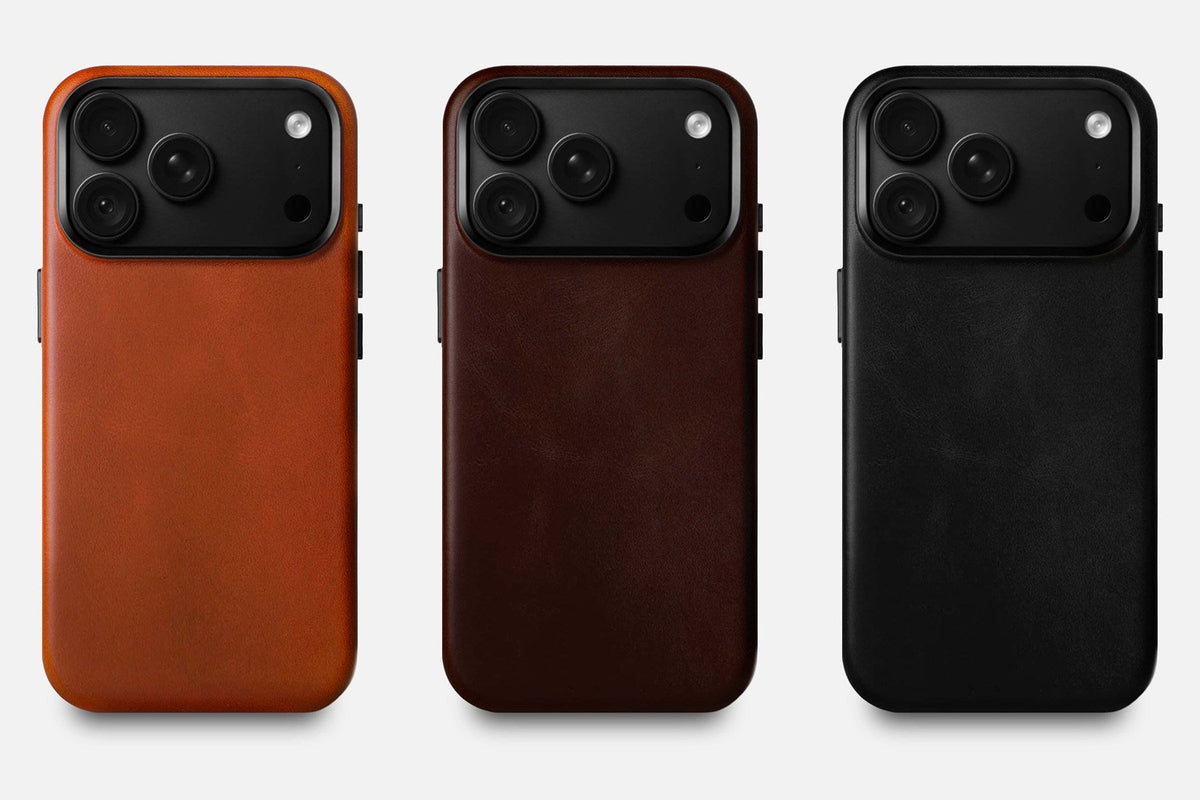
How much a mark shows also depends on the colour. Saddle Brown changes the most, so marks show more at first and then disappear into a darker, warmer shade. Dark Brown and Black hide small marks from day one and change more quietly. If marks bother you, start with the Dark Brown or Black case for iPhone 18 Pro. If you want the most character, choose Saddle Brown. All three are in our iPhone 18 case collection, and our guide to pairing the iPhone 18 Pro colours with leather helps with the choice.
If you are still deciding whether marks are a feature or a flaw, we make the case for the first one in why leather still matters.
Frequently asked questions
Does a leather phone case scratch easily?
More easily than hard plastic, yes. Full grain leather has no coating on top, so keys and coins leave marks. The difference is that most of those marks can be rubbed out or fade with use, which a scratch in plastic never does. That trade is a big part of why we think leather is the best material for a phone case.
Can you remove scratches from a leather phone case?
Light ones, usually. Rub them with a clean fingertip, and for deeper ones work a little leather conditioner into the whole back of the case. Cuts that break the surface will not disappear, but they darken and blend in over time.
Will water ruin a leather phone case?
No. Rain and splashes darken the leather while it is wet and can leave a mark as it dries. Blot it, let it dry at room temperature, and if a ring stays, dampen the whole panel evenly so it dries to one tone. Just do not soak it.
Can I use baby wipes or hand sanitiser on a leather case?
Better not. Alcohol and cleaning agents dry out the leather and can lift its colour. A barely damp cloth does the job.
How often should I condition a leather phone case?
Every few months at most, and only when the leather starts to feel dry. A pea sized amount covers the whole case.
Keep reading
How to Clean a Leather Phone Case
Why Leather Still Matters in a Fast Moving Digital World

Leave a comment
This site is protected by hCaptcha and the hCaptcha Privacy Policy and Terms of Service apply.