

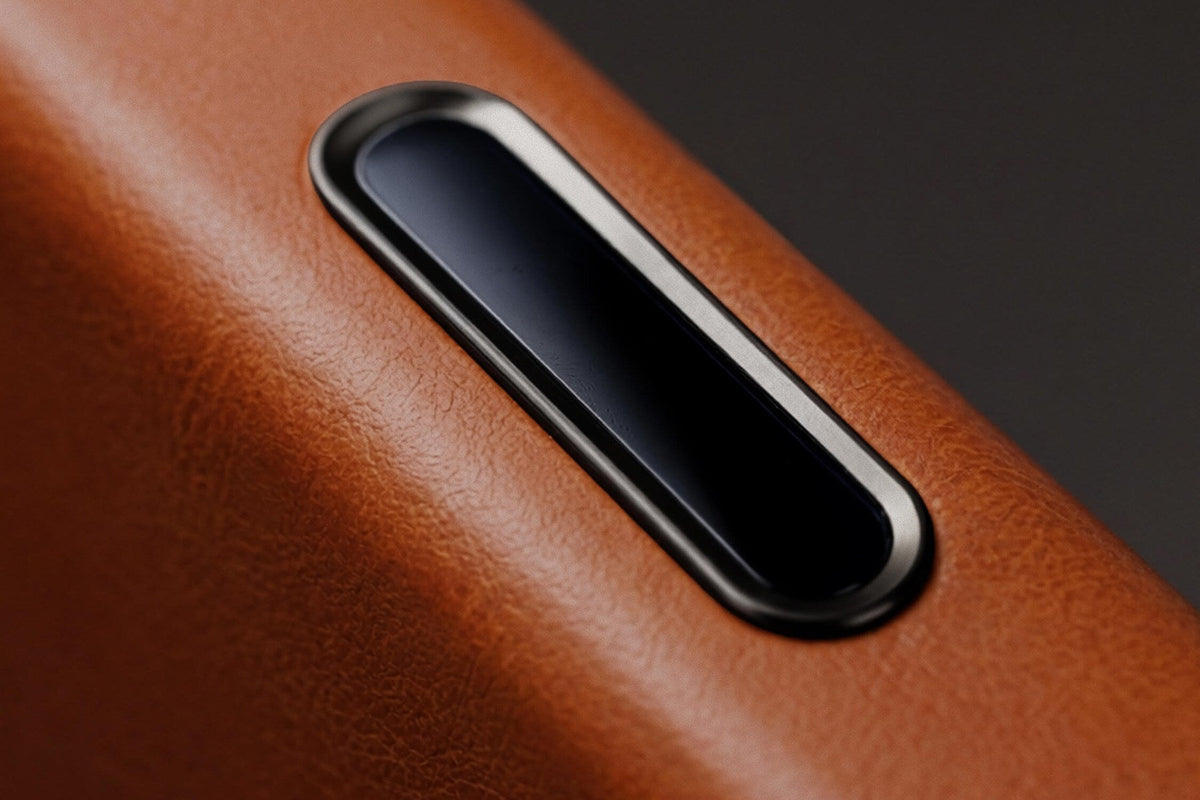
Full grain vs top grain vs genuine leather: the three labels sound like a ranking, but only the first one tells you much. The others are closer to marketing than to grades. Here is what each term really means, which part of the hide it comes from, how it ages, and how to tell the difference when you are buying something you will hold every day, such as a phone case.
The short version
- Full grain: the whole outer surface of the hide, with nothing sanded off. The hardest wearing, and the one that ages into a patina.
- Top grain: on a label, usually leather whose surface has been sanded and coated. Even and tidy, but it wears rather than ages.
- Genuine leather: real leather, and that is all the phrase promises. Often a lower layer of the hide with a pattern pressed in.
- Bonded leather: leather scraps and glue. Under the European standard, it is not leather at all.
Why the layer of the hide matters
A hide is thicker than most products need, so tanneries split it horizontally into layers. The top layer keeps the grain: the dense outer surface, with the natural pattern and the tightest fibres. The layers below it are looser and have no grain of their own.
That one cut explains most of what follows. The closer a piece of leather stays to the original surface, the harder it wears and the more character it has. Most of the other labels describe ways of making a lesser surface look like a better one.

What is full grain leather?
Full grain leather has kept its entire grain. Nothing has been sanded, buffed or corrected, which is how the European standard for leather terms, EN 15987, defines it. Pores, small scars and the natural pattern all stay visible, so no two pieces are quite the same.
Only the best hides can be used this way, because every mark shows, and that is a large part of why it costs more. In return you get the hardest wearing surface of the lot, and one that improves with use. It darkens and softens where you hold it and builds a patina, so a full grain case looks better after a year, not worse. This is our Saddle Brown iPhone 18 Pro Max case on day 0 and day 100.

Full grain also marks more easily than a coated surface, because there is nothing on top of it. Most marks can be rubbed out or fade with time, and looking after it takes very little. Our guides on how to clean a leather phone case and how to fix scratches and stains cover the rest.
What is top grain leather?
This is the term that causes the most confusion. Strictly speaking, top grain just means the top layer of a split hide, so all full grain leather is top grain. On a label, though, it usually means something else: leather whose surface has been sanded to remove marks, then finished with a coating and often a stamped pattern. The trade name for that is corrected grain.
Corrected leather has its place. It looks even, it shrugs off stains, and it costs less because hides with more marks can be used. What it does not do is age. The finish sits on top of the leather, so instead of deepening, it stays the same for a while and then scuffs or wears through.
What does genuine leather mean?
“Genuine leather” means the material is real leather, and that is all it means. It is not a grade, and EN 15987 does not define it as one. Full grain leather is genuine leather too.
In practice, the phrase tends to appear on the cheapest material that can still be sold as leather: split leather from the lower layers of the hide. It has no grain of its own, so a pattern is pressed into it and a coating goes on top. It can look smart in the shop, but with daily use the coating tends to crack or peel. Under the standard, a material with no grain layer left should not simply be called leather: it has to be described as split leather or suede, for example.
A good rule of thumb: makers who use full grain leather tend to say so. If a label only says genuine leather, it is worth asking which layer.
What is bonded leather?
Bonded leather is made from leather scraps ground into fibres, glued into sheets and usually finished with a plastic coating. Under EN 15987 it does not count as leather: its proper name is bonded leather fibre, and only half of it by weight has to be leather fibre. If you have ever owned a sofa that shed its surface in small flakes, you have met it.
Full grain vs top grain vs genuine leather at a glance
| Leather | What it is | Surface | How it ages |
|---|---|---|---|
| Full grain | Whole grain kept | Natural pores and marks | Darkens and softens into a patina |
| Top grain | Grain sanded, then finished | Even, with a coating | Stays the same, then wears through |
| Genuine | Usually a lower layer | Pressed pattern and a coating | Coating can crack or peel |
| Bonded | Scraps and glue | Plastic coating | Peels and flakes |
One caveat: there is no official ranking of leather grades. The standard defines materials, not a league table. The order above is simply how they tend to perform over years of daily use.
Where vegetable tanning and Nappa fit in
Grade tells you which part of the hide you have. Tanning tells you how it became leather, and that is a separate question.
Vegetable tanning uses natural tannins from bark and plants, and it takes weeks. Chrome tanning uses chromium salts and can be done in around a day, which is why most estimates put it at about 90% of the world’s leather. Vegetable tanned leather starts firmer, has that warm leather smell and develops the deepest patina.
Nappa is a type of leather rather than a layer. EN 15987 describes it as soft full grain leather, dyed all the way through and lightly finished. The name comes from Napa in California, where the process was developed at a tannery in the 1870s.
How to spot full grain leather
- Read the wording. “Full grain” is specific. “Genuine”, “real” and “premium” are not.
- Look closely. Natural grain is slightly irregular, with pores and the odd small mark. A pattern that repeats exactly was stamped on.
- Press it. Full grain creases and moves like skin under your thumb. A heavy coating stays flat and feels like plastic.
- Check the smell. Vegetable tanned leather smells of leather. A coated or bonded surface smells of very little, or of plastic.
Which should you choose?
For anything you hold every day and want to keep, full grain is worth the extra. It lasts longer, and it is the only one of the four that gets better with use. If you want a case that looks exactly the same on the day you sell your phone as on the day you bought it, full grain is the wrong choice, and a coated leather will suit you better.
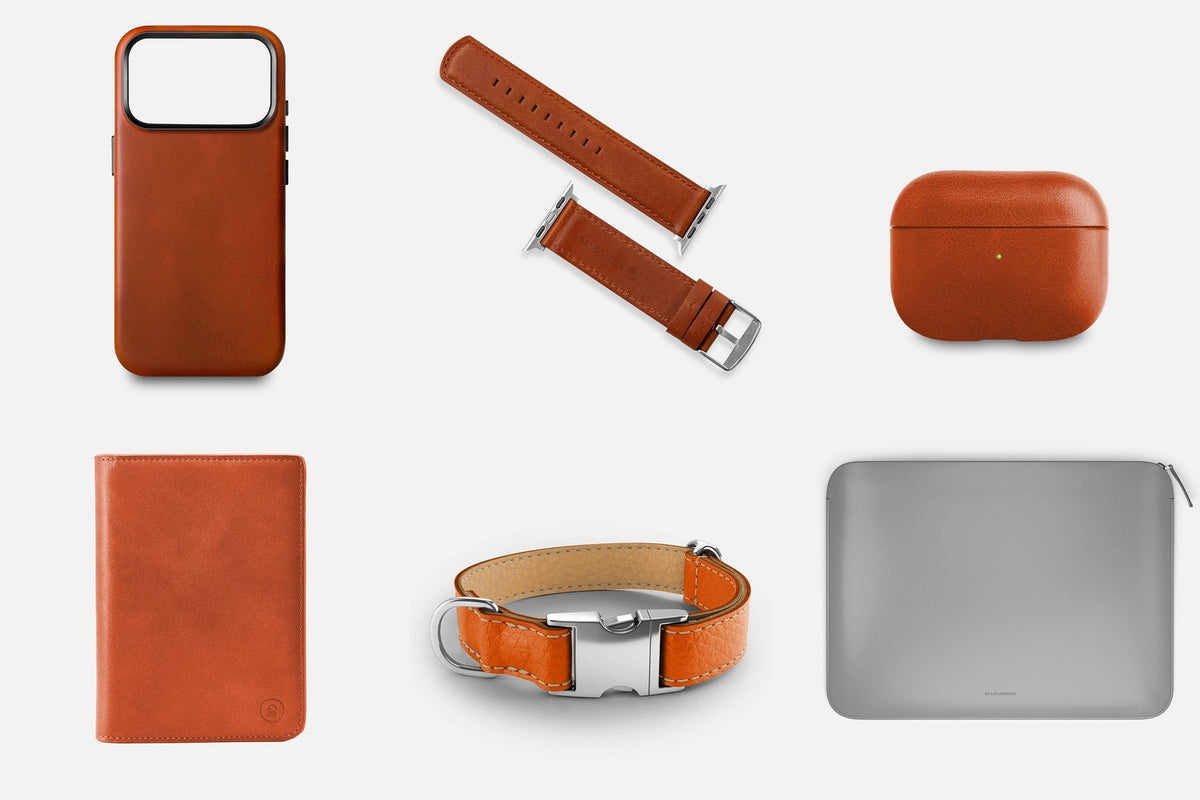
Our own choice is full grain. Our leather iPhone cases and core accessories are made from vegetable tanned full grain leather, with the outer surface of the hide left exactly as it is: no sanding, no buffing, no correction. Where softness matters more, as in our MacBook sleeves and some of our Apple Watch straps, we use Nappa, which is full grain too. If you are choosing a case, here is what else to look for in a leather case.
Frequently asked questions
Is full grain better than top grain?
For durability and ageing, yes. Full grain keeps the whole natural surface, while top grain, as the term is usually used, has had that surface sanded and coated. Top grain looks more even and resists stains better, which some people prefer.
Is genuine leather real leather?
Yes, but the phrase says nothing about quality. It is often used for split leather from the lower layers of the hide, finished with a coating and a pressed pattern.
Is bonded leather real leather?
No. It is made from leather fibres and glue, and the European standard EN 15987 does not count it as leather.
What is the highest grade of leather?
Full grain is generally considered the highest quality, although there is no official ranking. It is the only type that keeps the entire natural grain.
Does full grain leather scratch easily?
It marks more easily than coated leather, because there is no finish on top. Most light marks can be rubbed out with a fingertip or fade as the leather darkens.
Is Nappa leather full grain?
Yes. Under EN 15987, Nappa is a soft full grain leather, dyed through and lightly finished. The difference is the feel, not the layer of the hide.
Keep reading
Why leather is the best material for your Phone case
Why Leather Still Matters in a Fast Moving Digital World

Leave a comment
This site is protected by hCaptcha and the hCaptcha Privacy Policy and Terms of Service apply.